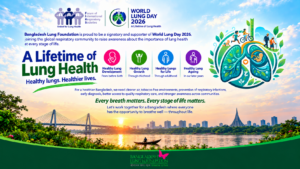
Bangladesh is the eighth most populous country in the world but ranked 94th in land area. Bangladesh faces numerous public health challenges, many of them related to respiratory health. From infant mortality due to acute respiratory infections (ARI), the ongoing struggle for smoking cessation and tobacco control, environmental and climate-related respiratory hazards, implementing occupational lung safety, ensuring availability of essential medicines, universal vaccination coverage, to strengthening oxygen production and delivery systems down to the grassroots level—each remains a national priority. Among these, tuberculosis (TB) control remains a cornerstone of respiratory health policy.
Despite successful treatment of pulmonary tuberculosis (TB), a substantial number of individuals remain burdened by chronic respiratory sequelae that have often been overlooked. The term ‘post-tuberculosis lung disease’ (PTLD) has been proposed to capture the spectrum of lung damage that persists after microbiological cure [1]. Patients often represent with chronic symptoms misclassified as ‘recurrent TB’ or ‘COPD’, resulting in diagnostic delays, unnecessary antibiotic or steroid use and lost productivity [2, 3]. However, the recognition, monitoring, and management of PTLD have opened a new frontier in addressing a long-overlooked public health challenge, a silent epidemic following the apparent ‘success’ of TB cure.
The Bangladesh Lung Foundation (BLF), the leading group of respiratory physicians of the country, in partnership with
The Damien Foundation and National Tuberculosis Control Program, and with the support of Stop TB, have recently initiated a pilot project in two districts to integrate PTLD care within primary health care. Around 9000 patients are predicted to complete their TB treatment within the project duration (September 2024 to February 2026) in these two districts. At least 30% of these patients will be evaluated, followed up, and enrolled for assessment and management of PTLD under this project.
This programmatic approach includes capacity building of healthcare providers for active identification of PTLD patients within the TB control program, developing management algorithms at the primary care level, establishment of referral pathways and evaluation of community-based adaptations of pulmonary rehabilitation in low resource settings. The project also assesses disease burden, socio-economic impact, mental health status and quality of life among PTLD patients.
To date, a total of 4309 individuals who have completed TB treatment have been screened using a structured questionnaire, clinical evaluation, chest x-ray, and spirometry. Among them, 1092 individuals (25.34%) have been identified as having PTLD. Patients with severe PTLD were referred to higher-level centres for advanced management, while those with mild to moderate PTLD were managed at primary health-care facilities following the standard management protocol and a structured pulmonary rehabilitation algorithm
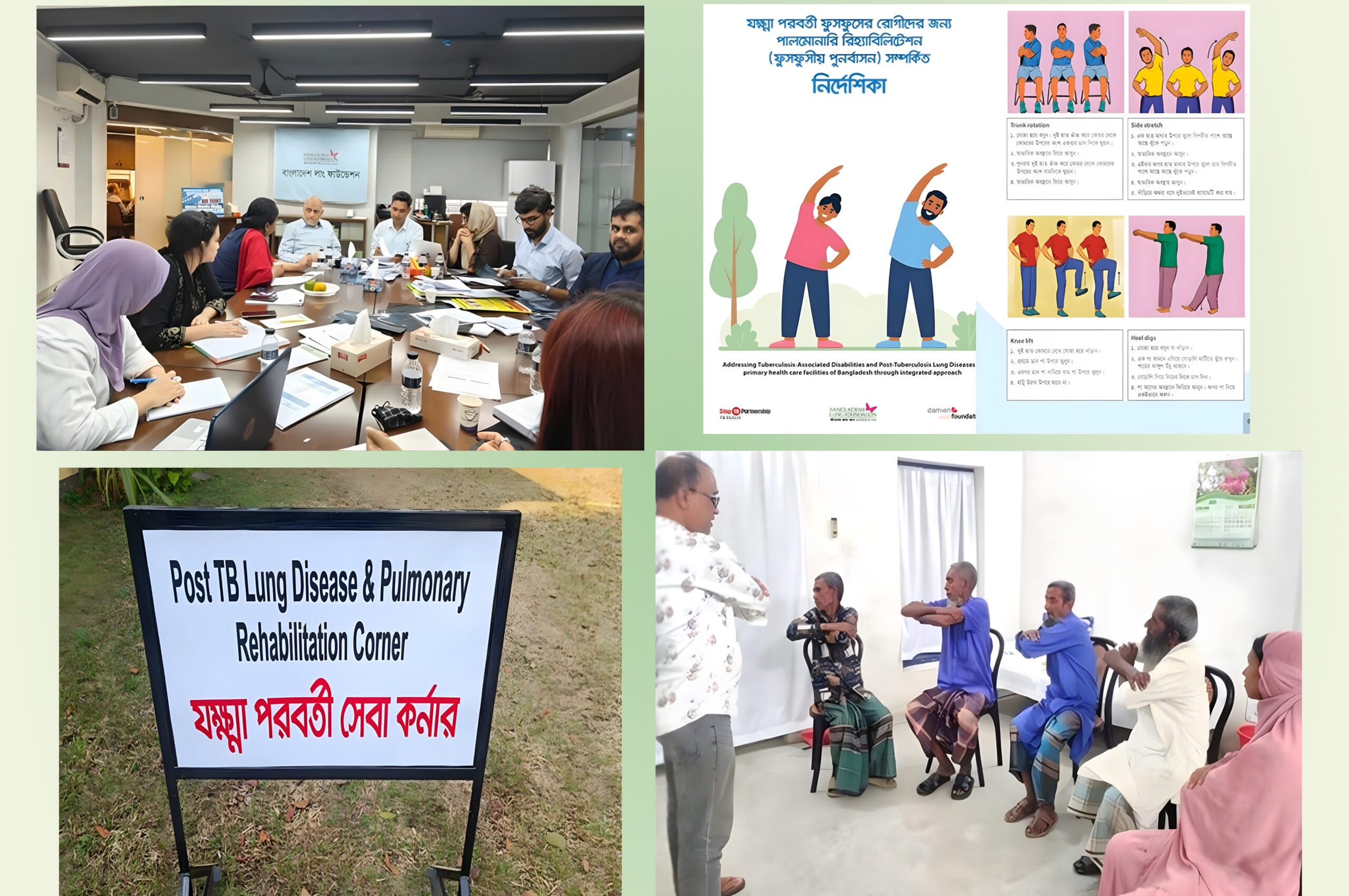
FIGURE 1
Preparatory meeting for the smooth running of ‘Post TB Lung Disease & Pulmonary Rehabilitation Center’ with glimpses from the ‘Patient’s Guide Book’ and hands-on training at field sites (Tuberculosis & Leprosy Control Project Hospital, Jalchatra, Tangail, Bangladesh).
We encourage the physicians, service providers, and policy makers involved in the field of chest diseases to consider PTLD as part of the broader specialty in respiratory care and welcome further discussion and research contributions on this area.